


Introduction: Why Scaling Microservices Matters
Microservices architecture has become a go-to strategy for developing modern, scalable applications. Instead of building one huge monolithic system, developers break applications into smaller, independent components that can be built, deployed, and scaled separately.
Scaling microservices brings flexibility and resilience—but it also adds complexity. From managing communication between services to ensuring smooth deployments and data consistency, there are many moving parts that need attention as your system grows.
This guide covers the essential areas you need to master for scaling microservices effectively and sustainably.
Coordinating Microservices: The Foundation of Scalability
When you break an application into multiple services, coordination becomes critical. Services must discover each other, balance loads, and communicate reliably.
Service Discovery
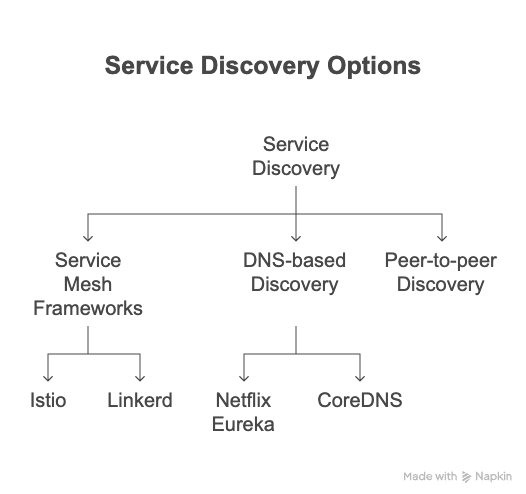
Service discovery is the process of allowing microservices to find each other automatically. As your system grows, manually configuring service endpoints becomes impossible. Scaling microservices requires decentralized, resilient service discovery.
Options include:
- Service mesh frameworks like Istio and Linkerd
- DNS-based discovery tools like Netflix Eureka or CoreDNS
- Peer-to-peer discovery for highly dynamic systems
Load Balancing
As demand spikes, load balancing ensures no single service instance gets overwhelmed. Tools like Kubernetes, NGINX, and HAProxy distribute incoming requests evenly across your service fleet, making scaling microservices smoother and preventing bottlenecks.
Inter-Service Communication
Efficient communication is a must when scaling microservices. Services exchange data constantly via:
- HTTP or gRPC protocols for synchronous communication
- Kafka or RabbitMQ for asynchronous messaging
Choosing the right communication strategy ensures reliability and performance.
Handling Data Consistency at Scale
Microservices often manage their own databases. Ensuring data consistency across distributed systems is one of the hardest parts of scaling microservices.
Techniques include:
- Saga Pattern: Break transactions into smaller steps with compensations for failure.
- Event-Driven Architecture: Services publish and react to events asynchronously.
- CQRS (Command Query Responsibility Segregation): Separate read and write operations.
- Optimistic Concurrency: Detect and resolve conflicts after they happen instead of locking resources.
By designing for eventual consistency, you can scale without compromising reliability.
Performance Optimization for Scaling Microservices
As microservices grow, maintaining performance becomes more challenging. Optimizing performance is critical to successful scaling of microservices.
Key strategies:
- Monitor and trace services with Helios, Datadog, or New Relic.
- Implement caching for frequent queries and responses.
- Optimize database queries and connection pooling.
- Use horizontal scaling—add more service instances instead of scaling a single server vertically.
- Adopt asynchronous processing to improve responsiveness and reduce blocking operations.
Performance tuning ensures your system stays fast even under growing loads.
Choosing the Right Infrastructure for Scaling Microservices
Infrastructure choices directly impact how well you can scale.
Popular options:
- Kubernetes for container orchestration and auto-scaling
- AWS Lambda or Azure Functions for serverless, event-driven services
- Docker Swarm for lightweight container orchestration
When scaling microservices, match your platform to your team’s skills, application complexity, and budget. Also, prioritize platforms that offer auto-scaling, distributed deployments, and strong monitoring capabilities.
Monitoring and Observability for Scaling Microservices
Monitoring is essential for diagnosing issues early and keeping your microservices healthy as they grow.
Important practices:
- Distributed tracing to track requests across services
- Centralized logging using ELK Stack or Helios
- Real-time performance dashboards with Prometheus or New Relic
- Automated alerting to detect failures or unusual behavior
Observability provides the insight you need to scale confidently and troubleshoot issues before they impact users.
Building Resilient Services: Strengthening Microservices at Scale
Resilience becomes even more crucial during scaling microservices.
Resilient practices include:
- Fault tolerance via load balancing, failovers, and redundancy
- Retry mechanisms for transient errors
- Graceful error handling to prevent cascading failures
- Chaos engineering with tools like Gremlin to test system durability
Scaling microservices isn’t just about handling growth—it’s about preparing for unexpected failures too.
Simplifying Deployment in Microservices Environments
Deployment complexity grows with the number of services. Simplifying deployment is critical when scaling microservices.
Use:
- Infrastructure as Code tools like Terraform or CloudFormation
- CI/CD pipelines with Jenkins, GitHub Actions, or GitLab CI
- Containerization with Docker
- Deployment strategies like blue-green or canary releases to minimize risk
Automation and gradual rollouts help maintain stability and speed.
Strengthening Security While Scaling Microservices
As systems grow, security risks multiply. Security must scale alongside your services.
Key practices:
- Authentication and authorization with OAuth 2.0, JWTs, and RBAC
- TLS/mTLS encryption for all service-to-service communication
- Vulnerability patching via automated update systems
- Security audits and penetration testing with Nessus or Metasploit
Prioritizing security protects your users and strengthens your system’s foundation for future growth.
Conclusion: Scaling Microservices the Smart Way
Scaling microservices is not just about splitting a monolith into smaller parts—it’s about designing a system that can handle growth gracefully.
From service discovery and communication to data consistency, infrastructure, monitoring, and security, every decision matters. Focus on building a resilient, observable, and adaptable system, not just a distributed one.
If you’re planning to scale your microservices-based app, start by mastering the basics outlined in this guide. Evolve your system thoughtfully, automate where possible, and always keep performance and user experience at the core of your decisions.
With the right strategies and tools, scaling microservices can transform your applications into robust, future-proof systems ready for anything.
FAQs
What is microservices architecture and why is it popular?
- Microservices architecture builds applications by splitting them into small, independent services. It’s popular because it allows faster development, easier scaling, and more flexible deployment compared to traditional monolithic approaches.
What are the main challenges when scaling microservices?
- Challenges include coordinating service discovery, managing communication, ensuring data consistency, maintaining performance, securing services, and handling complex deployments.
How do microservices communicate with each other?
- They communicate using HTTP or gRPC protocols for synchronous interactions and message brokers like Kafka or RabbitMQ for asynchronous messaging. Service discovery tools ensure dynamic connections.
Why is data consistency harder in microservices?
- Each service often manages its own database, making traditional ACID transactions difficult. Strategies like eventual consistency, Saga patterns, and event-driven architectures help solve this problem.
What’s the best infrastructure for scaling microservices?
- Popular options include Kubernetes for orchestration, AWS Lambda for serverless needs, and Docker Swarm for lightweight deployments. Choose based on workload complexity, team expertise, and cost.

Written by
Metana Editorial
Powered by Metana Editorial Team, our content explores technology, education and innovation. As a team, we strive to provide everything from step-by-step guides to thought provoking insights, so that our readers can gain impeccable knowledge on emerging trends and new skills to confidently build their career. While our articles cover a variety of topics, we are highly focused on Web3, Blockchain, Solidity, Full stack, AI and Cybersecurity. These articles are written, reviewed and thoroughly vetted by our team of subject matter experts, instructors and career coaches.
More from Metana Editorial →