
TL;DR
An RPC node is a computer that helps blockchain applications communicate with the network. It allows dApps to send transactions, retrieve data, and interact with smart contracts without running a full node.
Key Points:
- RPC Nodes act as intermediaries between blockchain networks and applications.
- Common Uses include transaction processing and data retrieval.
- Types of Ethereum Nodes: Light, Full, and Archival.
- Solana Nodes: Validator Nodes (consensus) vs. RPC Nodes (data access).
- Advantages: Efficient blockchain access, offloads processing, and supports scalability.
- Disadvantages: Network latency, trust in third-party providers, and security risks.
- Choosing the Right RPC Endpoint: Consider network compatibility, reliability, security, scalability, and developer support.
Picking the right RPC endpoint ensures your Web3 app runs smoothly, securely, and efficiently!
What is an RPC Node?
Before we get into what a RPC node is let us discuss what RPC is first.
A Remote Procedure Call (RPC) is basically a way for one program (the client) to communicate with another program (the server) over a network—without needing to know all the technical details.
An RPC node is just a computer running blockchain client software. Take Ethereum, for example—an RPC node runs both the Execution Layer (EL) and Consensus Layer (CL) to keep the blockchain working. There are different types of Ethereum nodes:
- Light Nodes: Only store key blockchain data to save space.
- Full Nodes: Store the entire blockchain and help verify transactions.
- Archival Nodes: Keep a complete record of all blockchain history.
On Solana, developers can set up Validator Nodes or RPC Nodes:
- Validator Nodes: Take part in Solana’s consensus process and earn rewards for validating transactions.
- RPC Nodes: Act as a bridge between dApps and the blockchain, providing access to data without running a full node.
What is an RPC Used For?
RPC is what makes distributed systems work smoothly. It allows a program to run code on another computer just like it’s running on its own system—super useful for blockchain networks.
Here’s a simple breakdown of how it works:
- When an RPC function is compiled, it includes a stub—a small piece of code that translates data between the client and the server.
- This stub sends a request to a client runtime program.
- The client runtime figures out where the server is and sends the request over the network.
- The server processes the request and sends a response back through its stub.
Advantages and Disadvantages of RPC Nodes
| Advantages | Disadvantages |
|---|---|
| Makes communication between distributed systems seamless | Can slow down due to network dependency |
| Helps dApps interact with blockchains efficiently | Requires trust in third-party providers if not self-hosted |
| Offloads processing work to remote servers | Security risks if the endpoint gets compromised |
| Simplifies app development by handling remote calls | Public endpoints may have limited customization options |
| Supports scalability by distributing computing power | High-performance apps might need dedicated nodes |
What is an RPC Endpoint (RPC URL)?
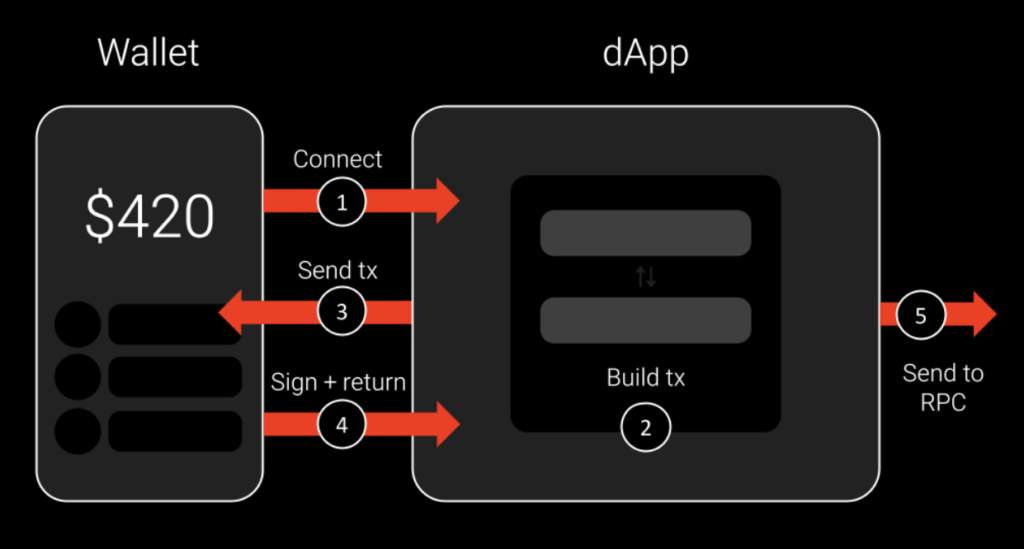
An RPC Endpoint is basically a Web3 access point—a URL that connects dApps to the blockchain. It lets applications:
- Send transactions
- Retrieve blockchain data
- Interact with smart contracts
Think of it as the gateway that helps Web3 applications talk to the blockchain.
Choosing the Best RPC Endpoint
Picking the right RPC endpoint is key to making sure your Web3 app runs smoothly. Here’s a simple checklist to help you decide:
- Network Compatibility: Make sure the endpoint works with your blockchain (Ethereum, Binance Smart Chain, etc.) and supports the required JSON-RPC protocols.
- Reliability & Uptime: Look for an endpoint with minimal downtime and high availability—blockchain access should always be uninterrupted.
- Security Features: Go for endpoints with strong authentication, encryption, and rate-limiting features to protect your transactions and data.
- Scalability: Consider if the endpoint can handle high traffic and network congestion, especially during busy periods.
- Documentation & Support: A good endpoint provider should have clear documentation, helpful resources, and solid customer support to make your life easier.
By keeping these factors in mind, you can pick an RPC endpoint that ensures your Web3 application is fast, secure, and reliable!
FAQs
What is an RPC node in blockchain?
- An RPC node is a computer that runs blockchain client software and allows applications (like dApps) to interact with the blockchain network by sending transactions, retrieving data, and executing smart contracts.
Why are RPC nodes important for Web3 applications?
- RPC nodes act as a bridge between decentralized applications (dApps) and the RPC blockchain network, enabling smooth communication, data retrieval, and transaction execution without requiring users to run a full blockchain node.
What is the difference between a validator node and an RPC node?
- A validator node actively participates in the blockchain consensus process by verifying and adding transactions to the RPC blockchain, while an RPC node primarily provides data access and transaction processing for dApps without participating in consensus.
How do I choose the right RPC endpoint for my project?
- Consider factors like network compatibility, reliability and uptime, security features, scalability, and documentation and support to ensure the RPC endpoint meets your application’s needs.
Are public RPC endpoints safe to use?
- Public RPC endpoints are convenient but may pose security risks, such as data interception or rate limits. For production applications, it’s best to use private, dedicated, or self-hosted RPC nodes for enhanced security and reliability.

Written by
Metana Editorial
Powered by Metana Editorial Team, our content explores technology, education and innovation. As a team, we strive to provide everything from step-by-step guides to thought provoking insights, so that our readers can gain impeccable knowledge on emerging trends and new skills to confidently build their career. While our articles cover a variety of topics, we are highly focused on Web3, Blockchain, Solidity, Full stack, AI and Cybersecurity. These articles are written, reviewed and thoroughly vetted by our team of subject matter experts, instructors and career coaches.
More from Metana Editorial →